

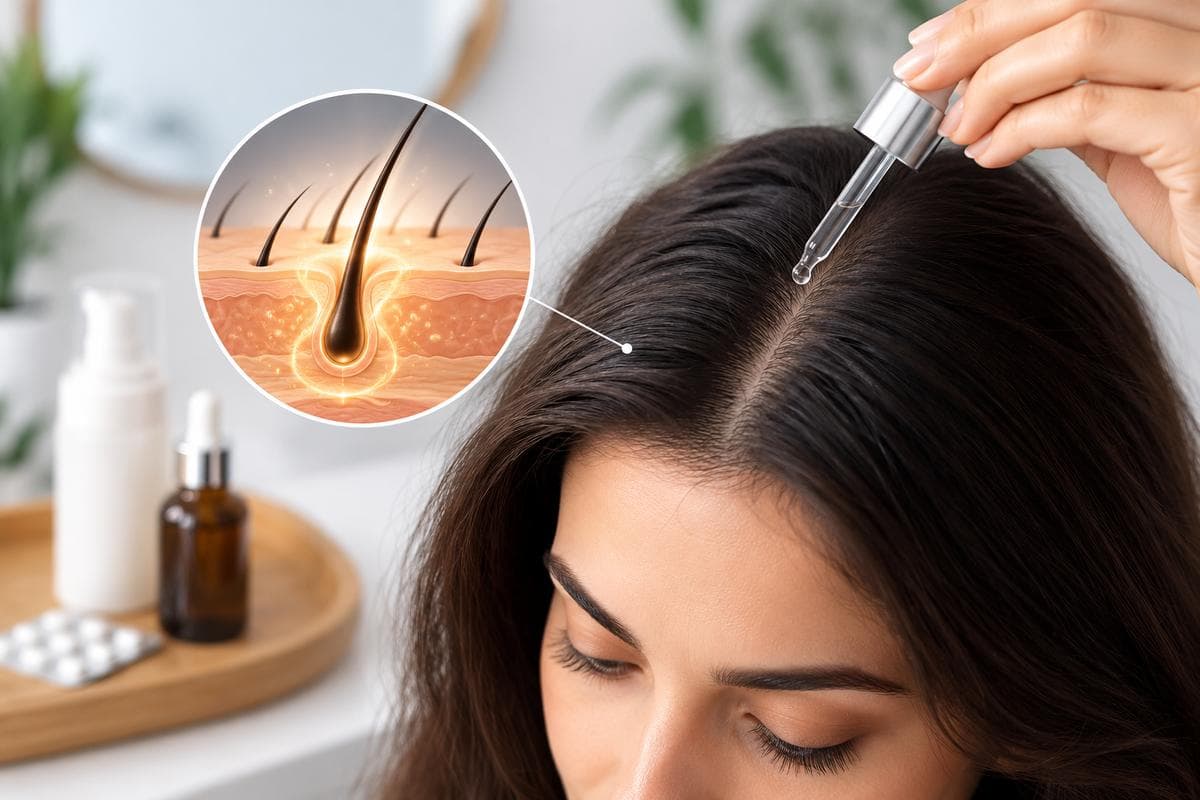
Minoxidil for Hair Loss: Complete Guide to Hair Regrowth Treatment, Usage, Benefits & Results
Direct Answer:
Minoxidil is a topical or oral treatment used to support hair regrowth by extending the hair's growth (Anagen) phase and reducing shedding, leading to thicker, longer hair over time. It's available as a serum, foam or pills, often combined with Finasteride, which blocks DHT — the hormone linked to hair thinning with age. Results typically take months of consistent use, and treatment should be guided by a doctor consultation and, where needed, a hair assessment.
Key Takeaways:
Minoxidil works by extending the hair growth phase and reducing shedding — it doesn't address DHT, which is why it's often paired with Finasteride.
It comes in multiple forms: serum, foam and oral pills/capsules, each suited to different preferences and needs.
Minoxidil for women typically uses a lower concentration (2.5mg) than the standard male dosing.
Results take time — most people don't see visible change for 3 to 6 months of consistent use.
A doctor consultation and, where relevant, a hair-loss blood test help identify the actual cause of hair loss rather than guessing at treatment.
Introduction
Noticing more hair in the shower drain or a hairline that's started creeping back is unsettling, and it usually sends people straight to Google for a quick fix. Minoxidil is one of the most researched and widely used treatments for hair loss, but it's also widely misunderstood — used inconsistently, in the wrong form, or without addressing the underlying cause. This guide covers how Minoxidil actually works, the different forms it comes in, and what realistic results look like.
How Does Minoxidil Work for Hair Loss?
Minoxidil extends the hair's growth (Anagen) phase and reduces shedding, which over time leads to thicker, longer hair. It's considered a doctor-guided treatment rather than a cosmetic product, since dosing and form should be matched to the individual's hair loss pattern.
What's the Difference Between Minoxidil Serum, Foam and Pills?
Minoxidil Serum — a topical solution applied directly to the scalp, available as a standalone 5.1% serum or combined with Finasteride (5% Minoxidil + 1% Finasteride). Serum is typically preferred by people who want targeted application and don't mind a liquid formulation.
Minoxidil Foam — a topical foam combining 5% Minoxidil with 1% Finasteride, often preferred for being lighter and less likely to drip or run compared to serum.
Minoxidil Pills — oral tablets or capsules (5mg Minoxidil, sometimes combined with Finasteride or Biotin), used by people who prefer a daily pill over topical application, or whose hair loss pattern responds better to an oral approach. A lower-dose 2.5mg capsule is available specifically for women.
Why Is Minoxidil Often Combined With Finasteride?
Minoxidil and Finasteride work on hair loss from two different angles — Minoxidil extends the growth phase, while Finasteride blocks DHT, the hormone responsible for hair thinning with age. Using Minoxidil alone can promote some regrowth, but it doesn't stop the underlying hair-loss process if DHT is a factor, which is why combination treatment is commonly recommended.
Important: Finasteride and pregnancy. Finasteride (oral or topical, including combination serums and foams) must not be used by anyone who is or may become pregnant. It carries a risk of birth defects affecting a male fetus’s genital development. Pregnant women should also avoid any contact with crushed or broken Finasteride tablets. This applies to every product on this page that contains Finasteride — not just the oral pills.
How Long Does It Take to See Results From Minoxidil?
Hair growth cycles are slow, so most people won't notice visible results for at least 3 to 6 months of consistent, correct use. Stopping treatment early — before the growth cycle has had time to respond — is one of the most common reasons people feel Minoxidil "isn't working."
Do You Need a Doctor Consultation Before Starting Minoxidil?
Yes — Minoxidil is a prescription-based, pharmacy-compounded treatment, not an over-the-counter cosmetic product. A doctor consultation through Valeo's Hair Growth Program helps determine the right form, strength and whether Finasteride should be added, based on your specific hair loss pattern and medical history.
Do You Need a Hair Assessment or Blood Test Before Treatment?
A hair assessment — and in some cases a hair-loss blood test covering biomarkers linked to hair health — helps identify the actual root cause of hair loss (hormonal, nutritional, genetic) rather than treating symptoms blindly. This step is optional but recommended, especially if hair loss has been ongoing or doesn't respond to initial treatment.
What Are the Common Side Effects of Minoxidil or Finasteride?
Minoxidil can cause scalp irritation, dryness or, in some cases, unwanted facial hair growth if applied incorrectly. Finasteride, taken orally, has been associated with sexual side effects in a small percentage of users. These effects vary by individual, which is another reason treatment should be guided by a doctor rather than self-administered.
Is Minoxidil Safe for Long-Term Use?
Minoxidil is generally considered safe for long-term, consistent use under medical guidance, though it's not risk-free for everyone. Anyone with underlying heart conditions or who is pregnant or breastfeeding should consult a doctor before starting treatment.
Is New Hair Growth From Minoxidil Permanent?
No — Minoxidil needs to be used continuously to maintain results. Stopping treatment typically leads to a gradual return of hair loss over the following months, since Minoxidil manages the growth cycle rather than curing the underlying cause.
What Hair Growth Treatments Are Available?
Medical Review
Reviewed by: May Chalhoub
Certified Nutritionist | Licensed Dietitian | Health Coach
May Chalhoub is a licensed dietitian, health coach, and certified nutritionist specializing in nutrition and dietetic counselling.
Conclusion
Minoxidil can genuinely help with hair regrowth, but it works best as part of a guided treatment plan rather than a product bought off the shelf and used inconsistently. Valeo Health's doctors can assess your specific hair loss pattern through the Hair Growth Program,, recommend the right form and strength, and build a plan — including a blood test if needed — so treatment actually addresses the cause.
Sources/References